
Tail of the Tiger
Jane Elise Muir
Artwork for ‘Tension‘ (Issue 23)
The Science
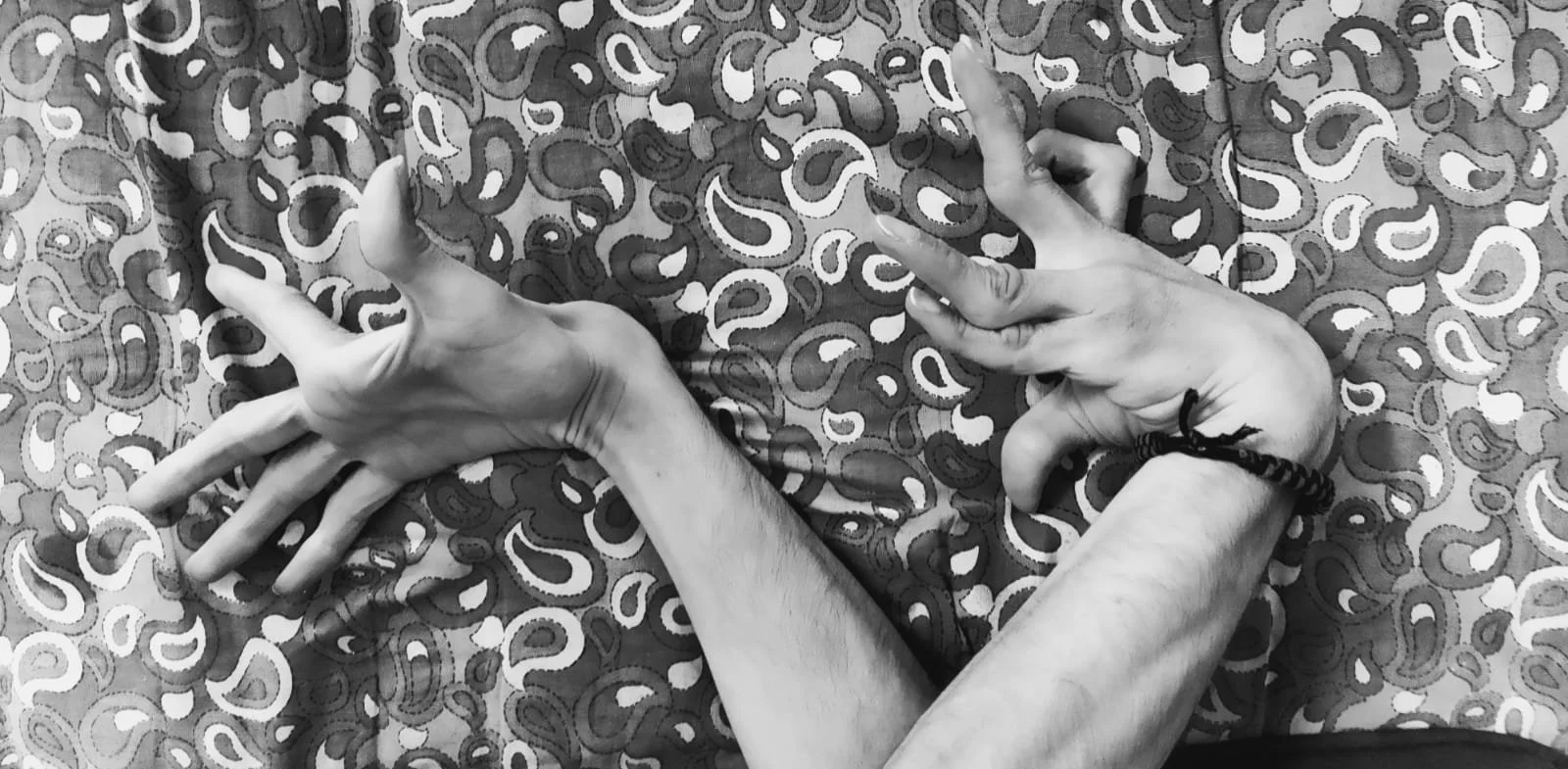
Cerebral Palsy, in this case the dyskinetic kind, can cause involuntary movements, spasms and muscle tone fluctuation. Raf’s hands are twisted/distorted in a way that is typical of this type of CP. He can use his right hand for very simple actions, but without pincer grip. When he is tense, or over excited, whole body spasms or involuntary movements prevent him from using his muscles in the way he intends, and this in turn makes him feel even more tense. In the photo his hands are relatively relaxed, but they can clench up in such a way that he cannot unclench them.
The Medium
OPPO phone camera and processed with the inbuilt editing software. Gillian uses black and white along with sepia because she finds that they help to “cement a moment into memory - they strip away overstimulation and let you focus on the heart of the image. Without the distraction of colours, the subject stands out more clearly.” Rafael himself wrote the words ’smashing the tail of the tiger’ when he did some writing about ‘how it feels to be me’ when he was a teenager (he is now an adult).
The Artist
Below is a poem linked to this image. This poem was written by the model’s mother, and the photograph was taken by Gillian Edginton who was carer to the poet's son, Rafael. Gillian has a degree in photography and, with permission, took unstaged photos of Raf sporadically on her phone during her time as his carer.
Tail of the Tiger
Legs jerk and kick
arms flail wildly.
A bird shut in a room
crashing into glass.
Voices entreating
Relax! Calm down!
Like coiled springs his limbs
fight, smash the tail of the tiger.
Only a wild run over the moors,
a marathon would do,
the role, perhaps, of a swan
in Swan Lake.
Instead, only music brings stillness,
and sleep (for now) brings release.
Copyright statement. This work is published under the CC BY-NC-SA license